
You are using an out of date browser. It may not display this or other websites correctly.
You should upgrade or use an alternative browser.
You should upgrade or use an alternative browser.
Eutelsat Hot Bird 13F & 13G
- Thread starter solly
- Start date


Marcus_21
Specialist Contributor
- My Satellite Setup
- Motorized dish Gibertini 150 cm + Space Digital SDLNB4 + actuator QARL 24"+ GBOX V3000... Motorized dish Gibertini 125 cm + Inverto Pro Quad PLL + actuator 18" + V-Box II.
- My Location
- 40.7N - 14.5E
Telemetry signals have been switched to linear polarity.
Telemetry 11704,6 RHCP has been switched to 11701,70 Horizontal, while 12500,00 has switched from LHCP polarity to Horizontal.
Telemetry 11704,6 RHCP has been switched to 11701,70 Horizontal, while 12500,00 has switched from LHCP polarity to Horizontal.

EnoSat
Specialist Contributor
- My Satellite Setup
- TBS-5927/5925/5220 , Dreambox , Edision , Mutant , Octagon , Uclan
- My Location
- Slovakia
noneany plan switch tp over weekend ?
Marcus_21
Specialist Contributor
- My Satellite Setup
- Motorized dish Gibertini 150 cm + Space Digital SDLNB4 + actuator QARL 24"+ GBOX V3000... Motorized dish Gibertini 125 cm + Inverto Pro Quad PLL + actuator 18" + V-Box II.
- My Location
- 40.7N - 14.5E
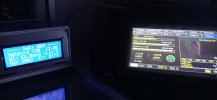
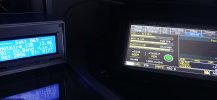
Today the first transponder was transferred to the new Hotbird 13F...
Previously active on the Hotbird 13B
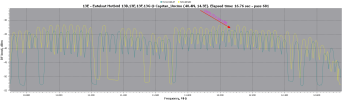
Shutdown
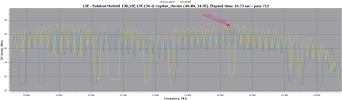
and activated on the 13F
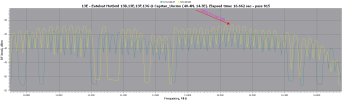
The values taken yesterday, with an 80cm dish...
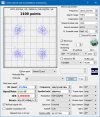
and those of today
I am also attaching the pdf file of how the transponders are distributed on the various satellites.
Previously active on the Hotbird 13B
Shutdown
and activated on the 13F
The values taken yesterday, with an 80cm dish...
and those of today
I am also attaching the pdf file of how the transponders are distributed on the various satellites.
Attachments

anto@
Regular Member
- My Satellite Setup
- dish 180 laminas 4 feed ku c lin c circ ka tbs 6983 tbs 6903X tbs 6522 JPC positioner
- My Location
- italy
Paolo71
Member
- My Satellite Setup
- Gibertini 100cm, STAB HH120, Inverto BU 0.2dB, Laminas 120, Moteck SG2100A, Inverto Premium 0.2dB.
TBS 5925, Edision OsMio 4K plus, AZbox Premium HD+, pc AMD FX8350 ram 32Gb. IQMonitor Pro, EBS Pro, Crazyscan, DvbDream, VLC and PotPlayer.
- My Location
- Monterotondo (Rome), Italy
You will get the real maximum signal if you fix the skew on HB13G (still under investigation if a skew correction is needed for 13F). Anyway it depends on how many degrees or decimals you moved the dish. On a 180cm moving the antenna less than 0.2 degrees there is no such change, from 0.3 degrees onwards you will get up to +- 1/1,5dB. Variable values about 0/1,0 dB is normal as the signal is not always steady. Anyway with large dishes it should be better to point the satellite with its exact position (with a 3.7m you can get a 3/4dB difference moving the antenna about 0.2 degrees !). But remember, always, each satellite moves itself around its position more times a day drawing a circle or a zigzag, moreover atmosphere does its job.a strange thing I notice on my system is that to have maximum deco quality move the disc a few digits between the 2 satellites

hvdh
Specialist Contributor
- My Satellite Setup
- Dr.HD F16, TBS 5927, T-55, Laminas 120 cm
- My Location
- Oss, NL (5.5°E 51.8°N)
Can we assume that both 13F and 13G have a fully occupied Ku-band frequency plan, like 13B ?I am also attaching the pdf file of how the transponders are distributed on the various satellites.
Marcus_21
Specialist Contributor
- My Satellite Setup
- Motorized dish Gibertini 150 cm + Space Digital SDLNB4 + actuator QARL 24"+ GBOX V3000... Motorized dish Gibertini 125 cm + Inverto Pro Quad PLL + actuator 18" + V-Box II.
- My Location
- 40.7N - 14.5E
During testing the 13G tested all 102 transponders, while the 13F during testing never triggered txp in DBS using Bulgariasat 1, or they were "masked" by Bulgariasat 1.Can we assume that both 13F and 13G have a fully occupied Ku-band frequency plan, like 13B ?
Furthermore, txp-18 the 24 MHz present on previous Hotbirds was tested with a bandwidth around 30~33 MHz (on both satellites).
hvdh
Specialist Contributor
- My Satellite Setup
- Dr.HD F16, TBS 5927, T-55, Laminas 120 cm
- My Location
- Oss, NL (5.5°E 51.8°N)
Thank you. Looking forward for some new frequency plans, I guess it's getting harder to complete them, it's been over a year!Furthermore, txp-18 the 24 MHz present on previous Hotbirds was tested with a bandwidth around 30~33 MHz (on both satellites).
Paolo71
Member
- My Satellite Setup
- Gibertini 100cm, STAB HH120, Inverto BU 0.2dB, Laminas 120, Moteck SG2100A, Inverto Premium 0.2dB.
TBS 5925, Edision OsMio 4K plus, AZbox Premium HD+, pc AMD FX8350 ram 32Gb. IQMonitor Pro, EBS Pro, Crazyscan, DvbDream, VLC and PotPlayer.
- My Location
- Monterotondo (Rome), Italy
Hello, according to confidential material, some HB 13G TXPs will be moved to HB 13F during the night between 4th and 5th of September, while HB 13B TXPs will be moved to HB 13G on the night of the 8th of September.
Also the confirmation for the HB 13G nominal beacons: 11705,30 H and 12501,00 H
Also the confirmation for the HB 13G nominal beacons: 11705,30 H and 12501,00 H
Marcus_21
Specialist Contributor
- My Satellite Setup
- Motorized dish Gibertini 150 cm + Space Digital SDLNB4 + actuator QARL 24"+ GBOX V3000... Motorized dish Gibertini 125 cm + Inverto Pro Quad PLL + actuator 18" + V-Box II.
- My Location
- 40.7N - 14.5E
I checked the spectrums recorded last night, I don't see any signs of movement.10815
10727
10971
Seems Transferred to 13F
Anyone please check signal status as these TP have unusual behaviour with me
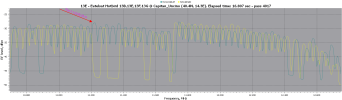
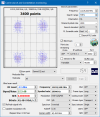
Txp 1, frequency 11219 H, has been switched on for a few hours, it seems switched on on 13F... but I need at least 24 hours to confirm. I need the spectrums for the next 24h, in order to highlight the small signal fluctuations coming from the various satellites positioned at 13°E.
Paolo71
Member
- My Satellite Setup
- Gibertini 100cm, STAB HH120, Inverto BU 0.2dB, Laminas 120, Moteck SG2100A, Inverto Premium 0.2dB.
TBS 5925, Edision OsMio 4K plus, AZbox Premium HD+, pc AMD FX8350 ram 32Gb. IQMonitor Pro, EBS Pro, Crazyscan, DvbDream, VLC and PotPlayer.
- My Location
- Monterotondo (Rome), Italy
I checked the spectrums recorded last night, I don't see any signs of movement.
Txp 1, frequency 11219 H, has been switched on for a few hours, it seems switched on on 13F... but I need at least 24 hours to confirm. I need the spectrums for the next 24h, in order to highlight the small signal fluctuations coming from the various satellites positioned at 13°E.
View attachment 151546 View attachment 151547
Hi, it's difficult to understand which satellite is the signal from, but I can say that at the moment the TXP is up but empty, no SIDs.
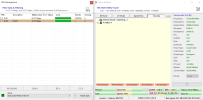
Hi, it's difficult to understand which satellite is the signal from, but I can say that at the moment the TXP is up but empty, no SIDs.
View attachment 151548
this tp and 12073 has same signal strength with me and i may assume that its from 13F
Marcus_21
Specialist Contributor
- My Satellite Setup
- Motorized dish Gibertini 150 cm + Space Digital SDLNB4 + actuator QARL 24"+ GBOX V3000... Motorized dish Gibertini 125 cm + Inverto Pro Quad PLL + actuator 18" + V-Box II.
- My Location
- 40.7N - 14.5E
@Paolo71, with the gibertini 150, I can grasp the difference in signal at various times.
Below are the example images, taken at various times (note the ones I highlighted with the red rectangle).
22:00 on August 29 (Rome time, GMT+2)
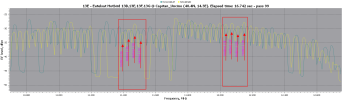
2:00 on August 30 (Rome time, GMT+2)
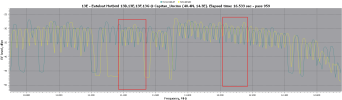
6:00 on August 30 (Rome time, GMT+2)
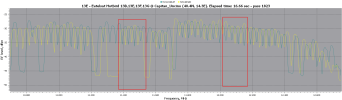
10:00 on August 30 (Rome time, GMT+2)
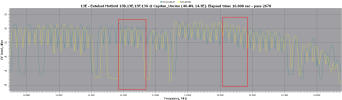
14:00 on August 30 (Rome time, GMT+2)
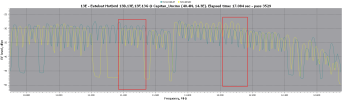
18:00 on August 30 (Rome time, GMT+2)
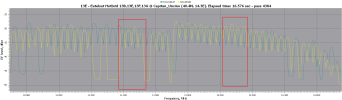
As you can see they change levels at different times...
Below are the example images, taken at various times (note the ones I highlighted with the red rectangle).
22:00 on August 29 (Rome time, GMT+2)
2:00 on August 30 (Rome time, GMT+2)
6:00 on August 30 (Rome time, GMT+2)
10:00 on August 30 (Rome time, GMT+2)
14:00 on August 30 (Rome time, GMT+2)
18:00 on August 30 (Rome time, GMT+2)
As you can see they change levels at different times...

satesco
Specialist Contributor
- My Satellite Setup
- seven antennas,one toroidal with 16 lnbs,
6 satellite receivers,2 Meters,9 PC cards(tbs6983,6903,6590,6504,6522,6209,2603,6909X,6903X,6902se,skystar hd2),2 tuners usb-tbs5927, TBS5927SE USB & tbs5925,Skystar HD.
Satellite reception between 100.5E-50.0W
- My Location
- Romania
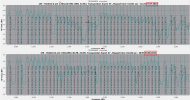
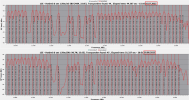
I should notice the changes when the new satellites are brought to 13.0E. But since I don't have time to deal with this, and only if you want, I will provide you with the signal at 13.0E at two different times, July and August 2023.@Paolo71, with the gibertini 150, I can grasp the difference in signal at various times.
Below are the example images, taken at various times (note the ones I highlighted with the red rectangle).
...
As you can see they change levels at different times...
As you can see, unlike the spectra posted by you, I also have the dB value of the signal found on each mux. It may help you more to observe whether muxes are activated on Hotbird 13F or 13G.
I must admit that I can't figure out what (if any) signal differences between the July and August times.
Maybe you can see what I can't. Thanks.
Attachments
Last edited:
Marcus_21
Specialist Contributor
- My Satellite Setup
- Motorized dish Gibertini 150 cm + Space Digital SDLNB4 + actuator QARL 24"+ GBOX V3000... Motorized dish Gibertini 125 cm + Inverto Pro Quad PLL + actuator 18" + V-Box II.
- My Location
- 40.7N - 14.5E
You can't compare spectrums, with a very long time between them.
The spectrums must not exceed 2 or 3 days, furthermore the weather conditions must be stable, a slight gust of wind is enough to compromise a part of the spectrum.
With crazyscan, I deactivate the autoscale to have the references of the grids always the same and select the automatic saving of the spectrum, in order to have spectrums saved every 18~20 seconds, for at least 20~24 hours. Finally, scan the spectrums with the irfanview image software, it is very light, it loads the images immediately and when you scroll the images with the right/left arrows you immediately notice the variations.
The spectrums must not exceed 2 or 3 days, furthermore the weather conditions must be stable, a slight gust of wind is enough to compromise a part of the spectrum.
With crazyscan, I deactivate the autoscale to have the references of the grids always the same and select the automatic saving of the spectrum, in order to have spectrums saved every 18~20 seconds, for at least 20~24 hours. Finally, scan the spectrums with the irfanview image software, it is very light, it loads the images immediately and when you scroll the images with the right/left arrows you immediately notice the variations.