

vma
Regular Member
- My Satellite Setup
- Main dish: 120cm No-Name, Motek SG-2100A, Bullseye LNB
- My Location
- Portugal
I finally got this working properly, so this may be of interest as a technical curiosity.
The original concept behind Ouinet, as I understand it, was more in the direction of distributed access via peer-to-peer/proxy mechanisms, not simply broadcasting ready-to-browse websites in a directly usable form.
That is why the extracted data structure is not very useful on its own.
What you get is basically an object store, typically under a bep5_http tree, with lots of subfolders and files such as:
I wanted to go one step further than that.
I now have a tool that can take:
So instead of ending up only with the raw object structure, it rebuilds the original directory hierarchy and restores the files to their proper paths.
That was the part I found technically interesting: not just extracting the data, but reconstructing the real usable file/folder structure from it.
The key point is that this goes beyond dumping the transmitted objects: it rebuilds the original directory hierarchy and restores the files to their proper paths.
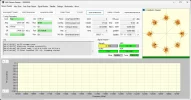
1) Get the stream
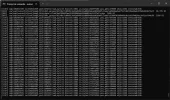
2) Run ouinet_extract.exe on the stream, TS file, or extracted object tree to reconstruct the original files and folders.
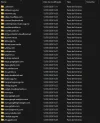
3) Browse the recovered folders
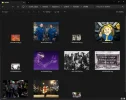
4) Check out the files (mostly webpages and their js, css, etc., files), some images and PDF's.
Technically, I found this quite interesting, because the transmitted structure is really an object store rather than something directly usable on disk.
This tool goes one step further by reconstructing the original files and folders from that structure.
I have uploaded the current Windows executable here: https://vma-broadcast.com/wp-content/uploads/2025/04/ouinet_extract.zip
The original concept behind Ouinet, as I understand it, was more in the direction of distributed access via peer-to-peer/proxy mechanisms, not simply broadcasting ready-to-browse websites in a directly usable form.
That is why the extracted data structure is not very useful on its own.
What you get is basically an object store, typically under a bep5_http tree, with lots of subfolders and files such as:
- body
- head
- sigs
I wanted to go one step further than that.
I now have a tool that can take:
- a live UDP stream,
- a TS recording,
- or an already extracted object tree,
So instead of ending up only with the raw object structure, it rebuilds the original directory hierarchy and restores the files to their proper paths.
That was the part I found technically interesting: not just extracting the data, but reconstructing the real usable file/folder structure from it.
The key point is that this goes beyond dumping the transmitted objects: it rebuilds the original directory hierarchy and restores the files to their proper paths.
1) Get the stream
2) Run ouinet_extract.exe on the stream, TS file, or extracted object tree to reconstruct the original files and folders.
3) Browse the recovered folders
4) Check out the files (mostly webpages and their js, css, etc., files), some images and PDF's.
Technically, I found this quite interesting, because the transmitted structure is really an object store rather than something directly usable on disk.
This tool goes one step further by reconstructing the original files and folders from that structure.
I have uploaded the current Windows executable here: https://vma-broadcast.com/wp-content/uploads/2025/04/ouinet_extract.zip