
- Forums
- What's On, Transponder and channel support
- *New Channels*
- Satellite Channels on 13 East Hotbird 13A/13B/13C
You are using an out of date browser. It may not display this or other websites correctly.
You should upgrade or use an alternative browser.
You should upgrade or use an alternative browser.
new channel on hotbird what is it? in 480i definition.
- Thread starter rodscha
- Start date


- My Satellite Setup
- A little less analogue, and a lot more crap.
- My Location
- UK
eQSat – Casting Over Firewalls
 sat.equalit.ie
rodscha
Specialist Contributor
- My Satellite Setup
- See signature
- My Location
- carcassonne south france,700ks south of Paris ,300k N of Barcelona
thank you ...and what is it? Does it show...programs?eQSat – Casting Over Firewalls
- My Satellite Setup
- A little less analogue, and a lot more crap.
- My Location
- UK
A testcard, keep watching, or set the recorder for tonight (and for the next 22 hours). interesting times for the company.

vma
Regular Member
- My Satellite Setup
- Main dish: 120cm No-Name, Motek SG-2100A, Bullseye LNB
- My Location
- Portugal
Have you guys actually read the linked website?
The testcard is just a placeholder! Embedded in the TS are files to distribute in censored regions!
Read this: https://sat.equalit.ie/wp-content/uploads/2024/03/README.txt
This is awesome!
The testcard is just a placeholder! Embedded in the TS are files to distribute in censored regions!
Read this: https://sat.equalit.ie/wp-content/uploads/2024/03/README.txt
This is awesome!
rodscha
Specialist Contributor
- My Satellite Setup
- See signature
- My Location
- carcassonne south france,700ks south of Paris ,300k N of Barcelona
So the testcard is an image sending people to a website helping nations with censorship to avoid censorship by sending low bitrate copies of censored websites? I understand very well the utility. Therefore the testcard is showing "what to look for".Have you guys actually read the linked website?
The testcard is just a placeholder! Embedded in the TS are files to distribute in censored regions!
Read this: https://sat.equalit.ie/wp-content/uploads/2024/03/README.txt
This is awesome!
I read the link,thank you.
Last edited:
vma
Regular Member
- My Satellite Setup
- Main dish: 120cm No-Name, Motek SG-2100A, Bullseye LNB
- My Location
- Portugal
Analyzing this transport stream, we notice that redpath has a very low bitrate:

This explains why it takes so long to render the testcard:

But interestingly, redpath has one VPID 1271 and two(!) APID 1272 and 1273:
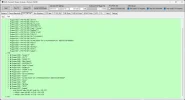
Looking at the data stream:

We notice that APID 1273 has a much higher bitrate, 6 times the bitrate of VPID 1271! So the data is sent disguised as a secondary audio channel.
This screenshot shows some human readable data:
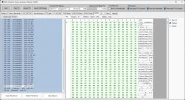
I am going to capture the TS to see if I can extract the files as mentioned in the eqSat_extractor.v2.0.zip archive readme.
This explains why it takes so long to render the testcard:
But interestingly, redpath has one VPID 1271 and two(!) APID 1272 and 1273:
Looking at the data stream:
We notice that APID 1273 has a much higher bitrate, 6 times the bitrate of VPID 1271! So the data is sent disguised as a secondary audio channel.
This screenshot shows some human readable data:
I am going to capture the TS to see if I can extract the files as mentioned in the eqSat_extractor.v2.0.zip archive readme.


rodscha
Specialist Contributor
- My Satellite Setup
- See signature
- My Location
- carcassonne south france,700ks south of Paris ,300k N of Barcelona
and how are people supposed to....use this? INRUSSIA as a google keyword? I get 4 sites 1 instagram 1 facebook & 1 business link... they all look different.View attachment 167761
View attachment 167762
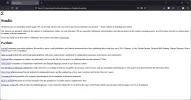
Was able to extract this:
View attachment 167763
This is just a partial download so far, nothing usable. But it shows the principle.
vma
Regular Member
- My Satellite Setup
- Main dish: 120cm No-Name, Motek SG-2100A, Bullseye LNB
- My Location
- Portugal
I think the idea is to record the channel with a satellite receiver with HDD (settop box) and then transfer the resulting TS to the PC. Here you extract pid 1273 (the fake audio channel) and get the files.
These produce what I imagine is a capture of selected websites, which you then browse offline.
This is the modern equivalent, I presume, of dropping panflets from a plane...
At the end of the day this is a form of propaganda.
Anyway, anyone with a dish pointed to 13.0E and a satellite receiver capable of recording a channel will serve this purpose.
These produce what I imagine is a capture of selected websites, which you then browse offline.
This is the modern equivalent, I presume, of dropping panflets from a plane...
At the end of the day this is a form of propaganda.
Anyway, anyone with a dish pointed to 13.0E and a satellite receiver capable of recording a channel will serve this purpose.
Automated receiving nodes capture the signal, extract the hidden data and seed it into a peer-to-peer network.and how are people supposed to....use this?
The content is dispersed among users via p2p apps like the Ceno browser and the app store Paskoochech.
rodscha
Specialist Contributor
- My Satellite Setup
- See signature
- My Location
- carcassonne south france,700ks south of Paris ,300k N of Barcelona
Thank you very much. Happy to learn about this.Automated receiving nodes capture the signal, extract the hidden data and seed it into a peer-to-peer network.
The content is dispersed among users via p2p apps like the Ceno browser and the app store Paskoochech.
No, it is an alternative way for people in oppressed countries to access sites that are blocked or censored by the government.so,this isn t a "public" website.Is it rather used by NGOs?
vma
Regular Member
- My Satellite Setup
- Main dish: 120cm No-Name, Motek SG-2100A, Bullseye LNB
- My Location
- Portugal
The transport-stream side of this is clever and technically very interesting. My concern is not the DVB engineering, but the editorial layer on top of it.
Once content is selected and pushed into censored or distressed regions, the key question is no longer only “can this be done?”, but also “who decides what is distributed, by what criteria, and with what transparency?”
That is not necessarily a criticism of the project’s intentions. It is simply recognition that curated information delivery is never fully neutral. If the mission is public-interest access to information, then the selection policy matters just as much as the transmission method.
From a broadcast point of view, I would also be interested to know why this hidden-data TS model was chosen over a more conventional low-bitrate broadcast information service. There may be good reasons, but it would be useful to understand them.
Once content is selected and pushed into censored or distressed regions, the key question is no longer only “can this be done?”, but also “who decides what is distributed, by what criteria, and with what transparency?”
That is not necessarily a criticism of the project’s intentions. It is simply recognition that curated information delivery is never fully neutral. If the mission is public-interest access to information, then the selection policy matters just as much as the transmission method.
From a broadcast point of view, I would also be interested to know why this hidden-data TS model was chosen over a more conventional low-bitrate broadcast information service. There may be good reasons, but it would be useful to understand them.
deeptho
Specialist Contributor
- My Satellite Setup
- Wavefrontier T90, Laminas 120cm, 2 other dishes; tbs 5927, tbs6904, tbs6909x, tbs6903x, tbs5990, tbs6981,tbs5927
- My Location
- Europe
Sure, but the idea is that there is already an imbalance because some less democratic governments control the media, prevent access to information they want not seen and imprison (or sue or poison, or have fall out of windows) people they don't like. Although the content seems to be aimed at countries farther east, we already have a few EU countries going in that direction.The transport-stream side of this is clever and technically very interesting. My concern is not the DVB engineering, but the editorial layer on top of it.
Once content is selected and pushed into censored or distressed regions, the key question is no longer only “can this be done?”, but also “who decides what is distributed, by what criteria, and with what transparency?”
That is not necessarily a criticism of the project’s intentions. It is simply recognition that curated information delivery is never fully neutral. If the mission is public-interest access to information, then the selection policy matters just as much as the transmission method.
So satellite transmission is better than via internet (nobody can detect that you are listening). Basically the idea is to take copies of censored websites and make them available in the countries where they are forbidden.
That the curated delivery is never entirely neutral is of course very true, but it seems a bit like the guy whose house is on fire complaining about the firemen not using the best quality of water to extinguish the fire.
To really appreciate democracy and freedom of speech, people should spend some time in a country which has none. All that is often left is humor. For example at one point the "great firewall of China" actually caught fire (=a main server) and I remmeber people could not stop making fun of that.
If such tools for bypassing communication restrictions, were really practical and working, and more importantly - if people would really use them at a large scale (the weak point) - the world would probably have a few more democracies.
To remain under the radar. Security by obscurity.From a broadcast point of view, I would also be interested to know why this hidden-data TS model was chosen over a more conventional low-bitrate broadcast information service. There may be good reasons, but it would be useful to understand them.
About the technical part: There is a github repository (eQualitie) with some code for unpacking the files, but the encapsulating in TS part seems to be missing, maybe on purpose. Only a binary is available (and works), but especially in this case, this is quite dangerous: who knows what the binary does? Maybe it has been hacked and automatically reserves a place in a prison for those decoding the stream.
Perhaps because it is easier for the end user, who only needs a smartphone with a specific browser instead of a satellite dish with a receiver.From a broadcast point of view, I would also be interested to know why this hidden-data TS model was chosen over a more conventional low-bitrate broadcast information service. There may be good reasons, but it would be useful to understand them.
- My Satellite Setup
- A little less analogue, and a lot more crap.
- My Location
- UK
I did mention on Monday (to Rodscha) recording as much content as possible was important, it may not have been understood.I think the idea is to record the channel with a satellite receiver with HDD (settop box) and then transfer the resulting TS to the PC. Here you extract pid 1273 (the fake audio channel) and get the files.
These produce what I imagine is a capture of selected websites, which you then browse offline.
This is the modern equivalent, I presume, of dropping panflets from a plane...
At the end of the day this is a form of propaganda.
Anyway, anyone with a dish pointed to 13.0E and a satellite receiver capable of recording a channel will serve this purpose.
- My Satellite Setup
- A little less analogue, and a lot more crap.
- My Location
- UK
If it is - currently - on a commercial satellite whereby the contract has been set up for uplinking, then I would assume the content within the transmission - payload and key(s) - have also been vetted/approved.The transport-stream side of this is clever and technically very interesting. My concern is not the DVB engineering, but the editorial layer on top of it.
Once content is selected and pushed into censored or distressed regions, the key question is no longer only “can this be done?”, but also “who decides what is distributed, by what criteria, and with what transparency?”
That is not necessarily a criticism of the project’s intentions. It is simply recognition that curated information delivery is never fully neutral. If the mission is public-interest access to information, then the selection policy matters just as much as the transmission method.
From a broadcast point of view, I would also be interested to know why this hidden-data TS model was chosen over a more conventional low-bitrate broadcast information service. There may be good reasons, but it would be useful to understand them.
As always the content will be key, the ability to receive on the smallest dish and with minimal equipment comes a close second.
(Think USB stick in a satellite enabled MPEG4 television for 'interrogation' later via laptop/mobile app)
Last edited: