Not sure is this one is already listed in this 52(!) page thread.
Anyway, I wanted to show the workflow using the VMA Video Analyser Package.
1) First the engineer needs to tune and receive the transponder:

2) He then can analyse the locked transponder and its Transport Stream:
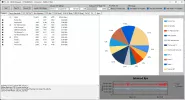
3) In broadcasting, it is usual to have a video wall / video mosaic to monitor all video services at once:

4) The video engineer is then interested in making sure that the colours are correct (the goal is mainly to have a natural skin tone - that is what the diagonal brown line in the vectorscope signals - and to match the SMPTE colour space) and within the optimal range (75%) to avoid clipping. Imagine that i.e. red can go from 0% (darkest red = black) to 100% (brightest full red). If you transmit red at 100%, chances are that encoders/decoders/transmission/reception will overload the signal a bit and the 100% becomes 110%. On the final conversion that gets to be clipped to 100%, so 10% of your colour space is lost! The norm is to not exceed 75%, in order to have some room and avoid clipping. This may not be the best technically correct explanation, but hopefully it makes this comprehensive.
So this is where waveform and vectorscope analysis come in: they measure and quantify the colours!
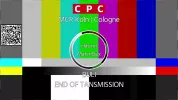
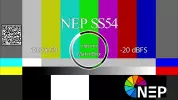
The test patterns allow to easily check if the receiving end is still getting correct colours. In the next picture we can see in the vectorscope that the base colours (yellow, cyan, green, magenta, red and blue) quite well match the theoretical ideal values!
At the same time a 1kHz tone is used. The audioscope shows a diagonal curve, because the X and Y axis are for Left and Right audio (may be the other way around, don't remember it). The spectrum shows the tone peak at 1kHz (it's a little bit off, but that is probably caused by the spectrum analyser resolution).
Conclusion: to really make use of a video test pattern, you need a waveform monitor with vectorscope!
An engineer could use this to tune the satellite receiver or TV on the receiving end or to adjust/tune the transmitted video on the sender side.