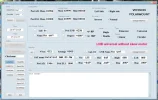
I'll try to describe how polarotors work and how I managed them in my POSI.
The first configuration that existed was the Chaparral-type polarotor.
A servo motor rotates an antenna in front of an LNB that only receives one polarity.
My POSI (configured in polarotor mode) applies two SKEW output values depending on the 14 or 18V voltage.
This arrangement is suitable when using an older LNB and a real polarotor.
Nowadays, we use "universal" LNBs that receive both H and V or R and L polarities.This is true in KU or C bands; you may wish to slightly adjust the position for certain satellites or shift it more significantly, as with an EGIS motor or an AZ-EL mount.
In this case, only one adjustment is necessary to rotate the LNB, with polarity selection being achieved by the 14/18V.
This is the case with the model manufactured by my friend TRUST.
Initially, I disabled the sending of pulses when selecting "Universal" and confirmed this sending by selecting "Polarotor."
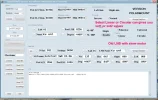
In my recent version, I send a single value in "Universal" mode regardless of the 14/18V value, and always send two values in "Polarotor" mode.
In addition, I store two values for linear polar and two others for circular polar on the same SAT.
Each SAT has its own four values.
In "Polarotor" mode, during settings or for verification, it is possible to test the other position by pressing the "OPT" button on the remote control.